
Chargeback Rebuttal Letters That Win Disputes
What Is a Chargeback Rebuttal Letter?
When a chargeback is filed against your merchant account, you have the right to challenge it. That challenge is called representment, and the rebuttal letter is the centerpiece of that process. It is a written statement addressed to your acquiring bank that argues, clearly and with supporting evidence, that the chargeback was unwarranted and that the funds should be returned to you.
Think of it less like a complaint letter and more like a structured legal brief. You are not venting frustration. You are building a case.
The letter accompanies a package of supporting documentation and is submitted within a strict deadline window set by the card network. Miss that window and the case is automatically closed against you. No exceptions.
Why So Many Rebuttal Letters Fail
Here’s the thing. Most merchants who lose representment cases do not lose because they were in the wrong. They lose because their letters were vague, emotional, or missing the right documentation.
Card networks and issuing banks do not review these cases subjectively. They follow a process. They look for specific evidence that directly addresses the reason code attached to the chargeback. If your letter does not speak to that reason code, it will not matter how compelling your argument feels.
Common mistakes include writing a letter that is too long and unfocused, submitting evidence that does not match the dispute type, addressing the wrong party, or simply failing to structure the rebuttal in a way that is easy to evaluate. Unfortunately, these errors are more common than you might expect, especially among merchants handling representment manually for the first time.
The Structure of a Winning Rebuttal Letter
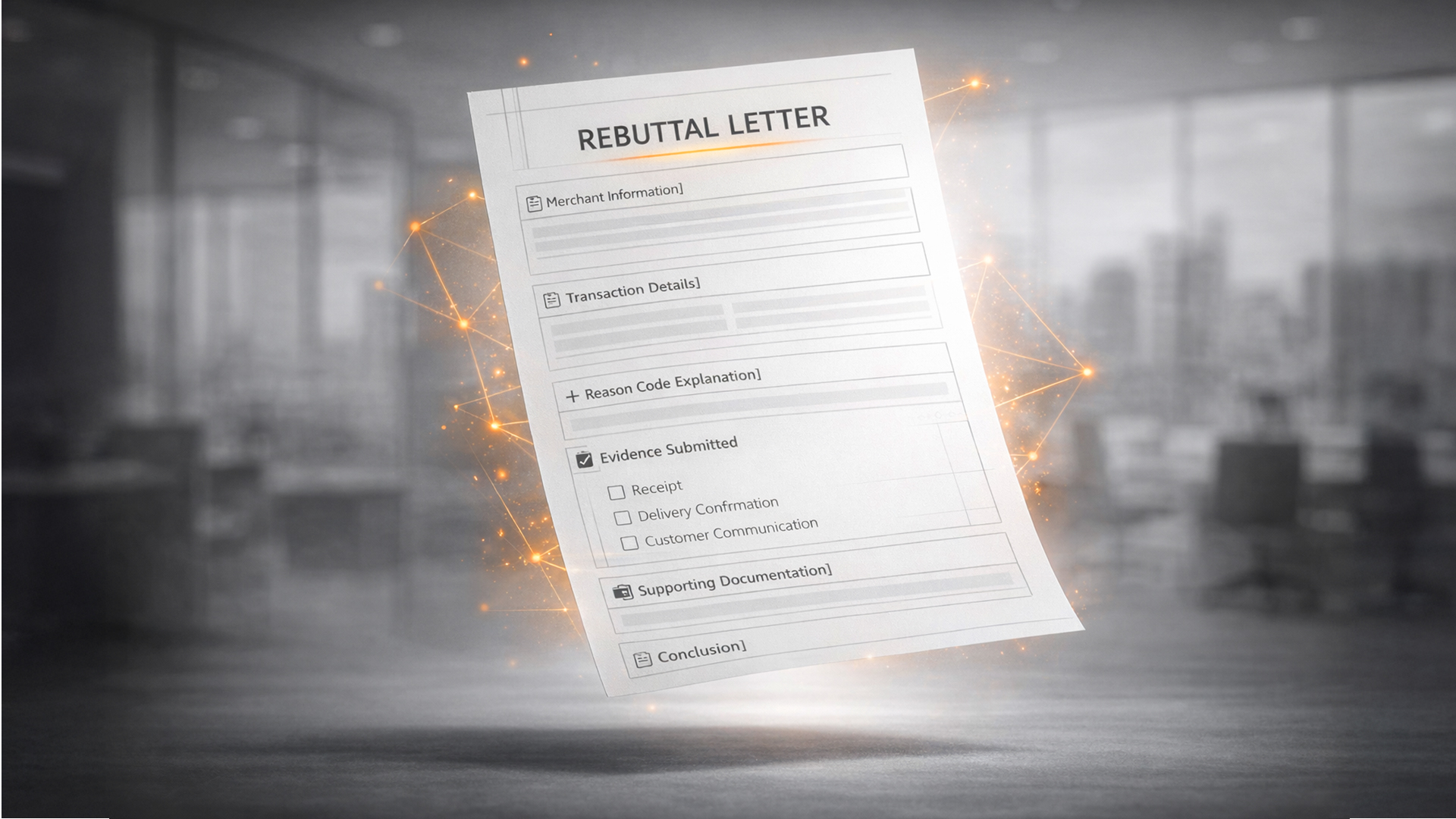
Chargeback rebuttal letters that win disputes tend to follow a consistent structure. The goal is clarity and relevance above everything else.
The opening should identify the transaction in question and state your position plainly. You are disputing the chargeback. Do not bury the lead.
From there, the letter should address the reason code directly. Each card network categorizes chargebacks using specific codes that indicate the nature of the dispute, whether that is fraud, item not received, service not as described, or a processing error. Your argument needs to map to that code. A letter written for a fraud dispute looks very different from one written for a subscription cancellation dispute.
The body of your letter should walk through the key facts of the case in a logical sequence. When was the order placed? When was it fulfilled? What communication existed between you and the customer? What does your policy say? Each point should connect back to the evidence you are submitting alongside the letter.
Keep the tone professional and factual. Frustration is understandable. But a letter that reads as emotional or defensive can work against you. Reviewers are looking for clarity, not conflict.
Close with a direct statement asking for the chargeback to be reversed and the funds to be returned to your account.
Evidence That Actually Moves the Needle
The letter itself is only as strong as the documentation behind it. Chargeback rebuttal letters without solid evidence rarely succeed, regardless of how well they are written.
What counts as strong evidence varies by dispute type, but some documents tend to carry weight across the board.
Order Confirmation and Timestamps
A clear record of when the transaction occurred, what was purchased, and at what amount is the foundation of any rebuttal. This should be one of the first documents in your package.
Proof of Delivery or Fulfillment
Whether you shipped a physical product or delivered a digital service, you need documentation that confirms delivery. For physical goods, this means tracking information tied to the customer’s address. For digital products or services, this could be login data, download logs, IP addresses, or usage records.
Customer Communication History
Any emails, chat transcripts, or support tickets between you and the cardholder can be valuable, particularly if they show the customer acknowledged receipt, requested a cancellation, or made contact after delivery. This kind of evidence is especially useful in friendly-fraud and first-party fraud cases where the customer received exactly what they ordered.
Policy Acknowledgment
If your refund or cancellation policy was presented and accepted at the time of purchase, include documentation of that. A checkbox at checkout, a terms acknowledgment, or a clearly visible policy page can support your argument when a customer claims they were unaware.
Authentication Data
For fraud-related disputes, 3-D Secure authentication results, AVS matches, CVV confirmation, and device fingerprinting data can demonstrate that the transaction was verified. This does not guarantee a win, but it significantly strengthens your position.
Matching Evidence to Reason Codes
This is where a lot of merchants stumble. Submitting the wrong type of evidence for a given dispute type is one of the most common reasons representment fails.
Visa and Mastercard each maintain their own chargeback reason code frameworks. The codes are different between networks and cover a wide range of dispute scenarios. Understanding which code applies to your chargeback, and what evidence is required to counter it, is not always intuitive. The requirements can be specific, and the acceptable documentation varies by network and sometimes by issuer.
This is one of the reasons working with a chargeback management partner can make a meaningful difference. When you know which evidence to submit for each code, your rebuttal letters become far more targeted and effective.
Where Rebuttal Letters Fit in the Bigger Picture
Representment is a recovery tool. It is what you use after a chargeback has already been filed. And while winning a representment case does recover revenue, it does not undo the chargeback itself in terms of your ratio. The chargeback is still counted at the time it is filed.
That is worth keeping in mind. A strong rebuttal letter strategy is valuable, but it works best as part of a broader approach to chargeback prevention. Preventing disputes from reaching the chargeback stage in the first place is always preferable. Solutions like RESOLVE give merchants visibility into disputes earlier in the process, consolidating chargeback alerts from services like Verifi CDRN, Ethoca Alerts, and Visa RDR into a single workflow. Acting on those alerts before a chargeback is filed removes the need for representment entirely.
DEFLECT takes it a step further upstream, sharing transaction and fulfillment data with cardholders and issuing banks at the point of inquiry. When customers can see exactly what they purchased and when it was delivered, many disputes never materialize at all.
When prevention and early resolution are not enough, RECOVER steps in. It automates the representment process, capturing transaction and fulfillment data directly from your systems and assembling it into structured, evidence-backed rebuttals. That kind of automation improves consistency and helps sustain win rates at scale, without overwhelming your team.
Download Our Free Rebuttal Letter Template
We put together a chargeback rebuttal letter template that you can use as a starting point for your own representment efforts. It is structured around the core elements covered in this article and is designed to be adapted to your specific dispute type and supporting evidence. You can grab it here: Download the Chargeback Rebuttal Letter TemplateThis template is a good start. But keep in mind that the letter alone will not win cases. The evidence behind it and the alignment with the relevant reason code are what ultimately determine the outcome. If you would like help fighting chargebacks our team is ready to help, feel free to contact us anytime.
Ready to Strengthen Your Representment Strategy?
If you are putting together chargeback rebuttal letters manually and finding the process inconsistent or time-consuming, we can help. Our team works with merchants to build structured representment workflows, identify the right evidence for each dispute type, and improve win rates over time. Whether you want to automate the process entirely through RECOVER or simply want expert guidance on how to build stronger cases, reach out to our team and we will walk you through the options.
Why ChargebackHelp?
ChargebackHelp offers a fully integrated approach to chargeback management that goes well beyond a single letter or a single tactic. Our DEFLECT, RESOLVE, and RECOVER solutions cover the full lifecycle of a dispute, from preventing transaction confusion before it escalates, to resolving chargeback alerts before they reach the chargeback stage, to recovering revenue through automated representment when it does. We bring card network integrations, alert management, evidence automation, and expert oversight into one platform, so merchants can focus on running their business rather than managing disputes case by case. Contact us to get started.
FAQs: Chargeback Rebuttal Letters That Win Disputes
What is a chargeback rebuttal letter?
A chargeback rebuttal letter is a written argument submitted to your acquiring bank as part of the representment process. It states your case for why a chargeback should be reversed and accompanies supporting documentation. ChargebackHelp can help you build and automate these letters through our RECOVER solution.
What should I include in a chargeback rebuttal letter?
At minimum, your letter should identify the transaction, address the reason code directly, summarize the key facts of the case, and reference the evidence you are submitting. Strong evidence typically includes order confirmation, proof of delivery, customer communications, and any applicable authentication data. The right evidence mix depends on the reason code involved.
Does a well-written letter guarantee I will win the chargeback?
No. The letter is important, but the outcome depends largely on the quality and relevance of the evidence submitted alongside it. A well-structured letter with weak or mismatched evidence will still lose. ChargebackHelp’s RECOVER solution helps ensure the right data is captured and assembled for each case.
How long do I have to submit a rebuttal letter?
Deadlines vary by card network and reason code, but response windows are typically short. Missing the deadline forfeits your right to challenge the chargeback entirely. Automation through RECOVER helps merchants track and meet deadlines consistently.
Does winning a representment case remove the chargeback from my ratio?
Not typically. Chargebacks are recorded against your ratio at the time they are filed. Winning representment recovers the funds but does not reverse the ratio impact. This is why chargeback prevention through solutions like DEFLECT and RESOLVE is just as important as recovery.
What is the difference between a rebuttal letter and a chargeback dispute?
The chargeback dispute is the formal process initiated by the cardholder. The rebuttal letter is your merchant response to that dispute through the representment process. You are not reopening the original dispute. You are formally challenging the chargeback that resulted from it.
Can I use the same rebuttal letter for every chargeback?
No. Chargeback rebuttal letters need to be tailored to the specific reason code and dispute type. A template is a useful starting point, but the argument and evidence must align with the nature of each individual case.